Community - Jeremy Wells
Picture this… A pastor arrives early at his church Sunday morning. He’s the first one there and walks down the center aisle carrying his briefcase. Right behind the pastor is his five year old son, Jeremy, carrying his red Mario Brothers lunchbox. Pastor walks up to the podium where he sets down his briefcase, opens it and starts arranging his bible and notes getting set up for his day. Little Jeremy goes to the front pew, sets down his lunchbox, opens it and starts to arrange his colored pencils and sketch pads, getting set up for his day.
Today we’re talking about Jeremy Wells. One way that Jeremy celebrates his one wild and precious life is by the visual art of drawing. I’ve seen many of Jeremy’s drawings. You may have too but just not have realized they were his. They’ve been all over several Trader Joe’s stores, there are commissioned murals of his on the sides of buildings, he’s drawn signs for businesses and events, individuals have hired him for personal projects and he tutors and offers classes on art and penmanship.
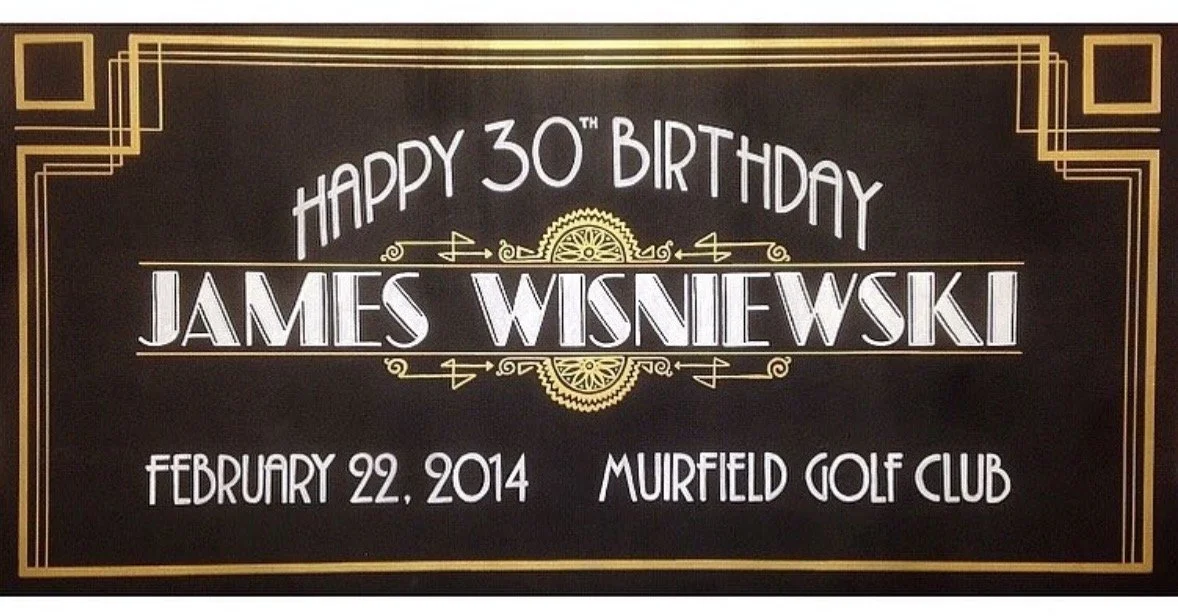
A birthday sign for an NHL player’s Great Gatsby themed birthday party
So let’s bridge the gap between little Jeremy with the lunchbox full of drawing supplies to today’s adult Jeremy who lives a life built on his drawing skills. It sounds like an easy enough progression, right? I mean, it makes sense. But don’t be too quick to assume it was easy for him. Keep in mind that today’s larger corporate society doesn’t always value art as being a lucrative career. The life of an artist is generally not a top ten pick for a financially successful career in the business sphere. This generalized value that art is not a valid livelihood, that it's just a hobby, is a very real undercurrent in our society. Anyone who desires to live a life supported by their art is swimming in a social sea where this undercurrent is very real. The artist living a life supported by their art is swimming against the undercurrent. It’s not always easy. Sometimes it’s really damn hard.
Let’s go back to young Jeremy already having a strong desire to draw and drawing regularly. He shares with me now that one foundational moment was when he was about seven years old and saw his friends’ comic books. The art was interesting, but ultimately he found the hyper masculine superhero designs to be boring. The lettering, though, looked really sharp and he loved how you could change an entire scene by simply making the letters bold or enlarged. But more than that, he just loved the way they looked. That’s when he began filling spiral notebooks with lettering.
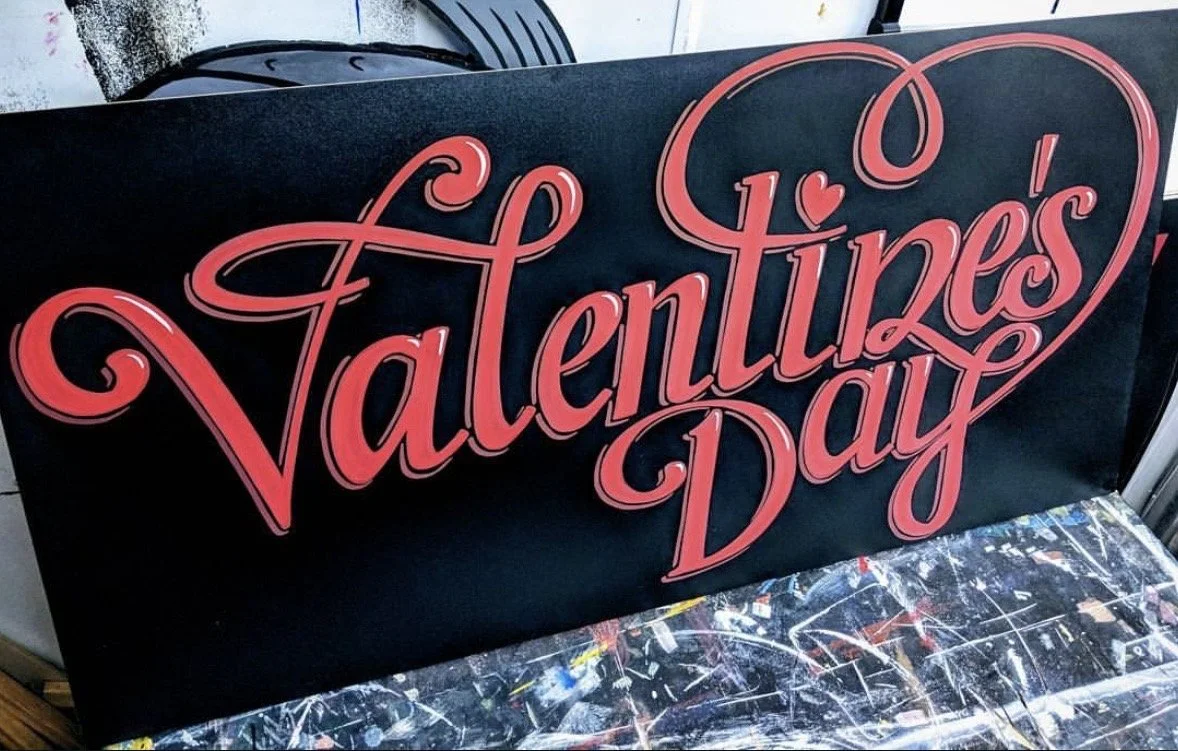
Valentine Lettering
Even at this young age Jeremy was following the things that lit up his heart. At age eight he had another core experience. He and his family went to the theatre to watch Disney’s, Beauty and the Beast. The movie started and he was in a magical world of animation. He was overwhelmed in the best way. He leaned his head back on the seat to take in as much as possible. He said the ballroom scene was so extraordinary to him, how the view panned out and spun around as if he was there; he remembers having the clear realization that someone had created this movie! That it was possible to create animation like this! Most importantly he wanted to know how they created it so that he could learn to create movies like this as well.
It’s no surprise to me that an eight year old would be so pulled into the magic of the big screen that they’d become creatively moved, but what does surprise me is that in Jeremy’s overwhelm he was wondering how the movie was made so that he could create something like that too. During that movie he decided he wanted to create animation when he grew up. He hadn’t just seen his first animated film, he had been introduced to, and recognized, his life’s work. Woe! That’s heavy!
Life, as it does, kept happening. Jeremy’s love for drawing lettering and traditional animation was still strong, but the art of traditional animation was dwindling as computer animation was growing quickly and widely. By the time Jeremy graduated high school early at age fifteen, traditional animation no longer had a place in the art industry. Jeremy’s hopes, dreams and plans to create traditional animation fizzled along with it.
The first job he took was simply to pay the bills, thinking that drawing was not an option to make a living. As a hobby he was still filling those spiral notebooks with lettering because he still loved it. After eight years of working this first job and not feeling like he was really living, he was ready for a change. He applied at a neighborhood Trader Joe’s for general work.
When Jeremy was called in for an interview, he chatted with the interviewer for a few minutes and then was asked only one question, “Is this your handwriting on your application?” Jeremy wondered what was going on and answered yes, that he had filled out his application by hand. The interviewer hired him on the spot saying they had been looking for someone to create signs. Jeremy hadn’t even known that was a possibility.
With this strange twist of fate, Jeremy was hired full time and put on a newly developed art team of two, where he and another newbie were given sign boards, paint markers and a list of signs to make. Then they were left to figure it out (the supervisors believed in them). Sign by sign Jeremy began figuring it out by doing it. By jumping in and starting. By letting a sign that was good enough be…well, good enough.
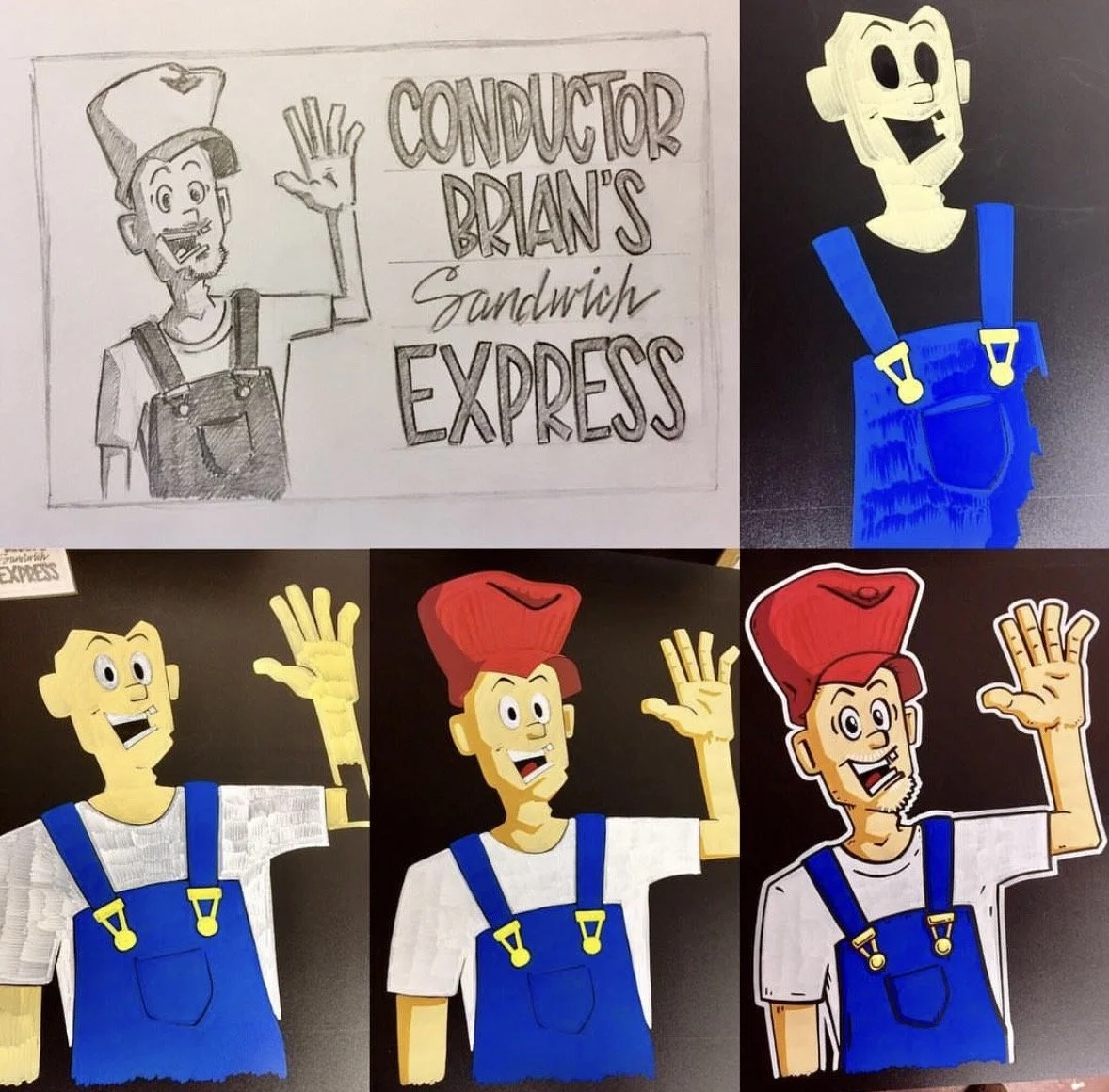
An old Trader Joe’s display themed for sandwich fixings, from concept to completion
Jeremy shares that it took about a year for him to get really comfortable with everything and with his creative ability in this format. With a new job there is so much to learn in general as well as the fact that he had never used the specific paint markers and sign boards they had at Trader Joe’s. It was all new and a learning curve.
After Jeremy settled into his job his creativity had more room to breathe. It was kicked up a notch when he was tasked with creating a sign for a new product, Wasabi Arugala. He was planning to do a typical sign like he’d done before but all he could picture in his head was an animated style arugula leaf as a boxer with eyes, mouth, arms, legs and big red boxing gloves. One of the boxing gloves was throwing a punch and on the glove was written, “A peppery punch!” The picture was clear in his mind so he just went with it. Because it was so different from the norm, he ran it by his supervisor before the sign was displayed. His supervisor looked at it, started nodding his head up and down and said, “Yes! More of THIS!”.
The Wasabi Arugula sign was a hit with customers as well. Jeremy started using his own unique concepts for Trader Joe’s signs, letting his personality shine through. This new level of creative expression at Trader Joe’s broke open another level of opportunity for Jeremy. Because of the high visibility of art at TJ’s, he started getting commission requests from businesses and individuals for signage, displays, menus, murals, teaching and tutoring. Literally hundreds of pieces of artwork later is where we find him today.
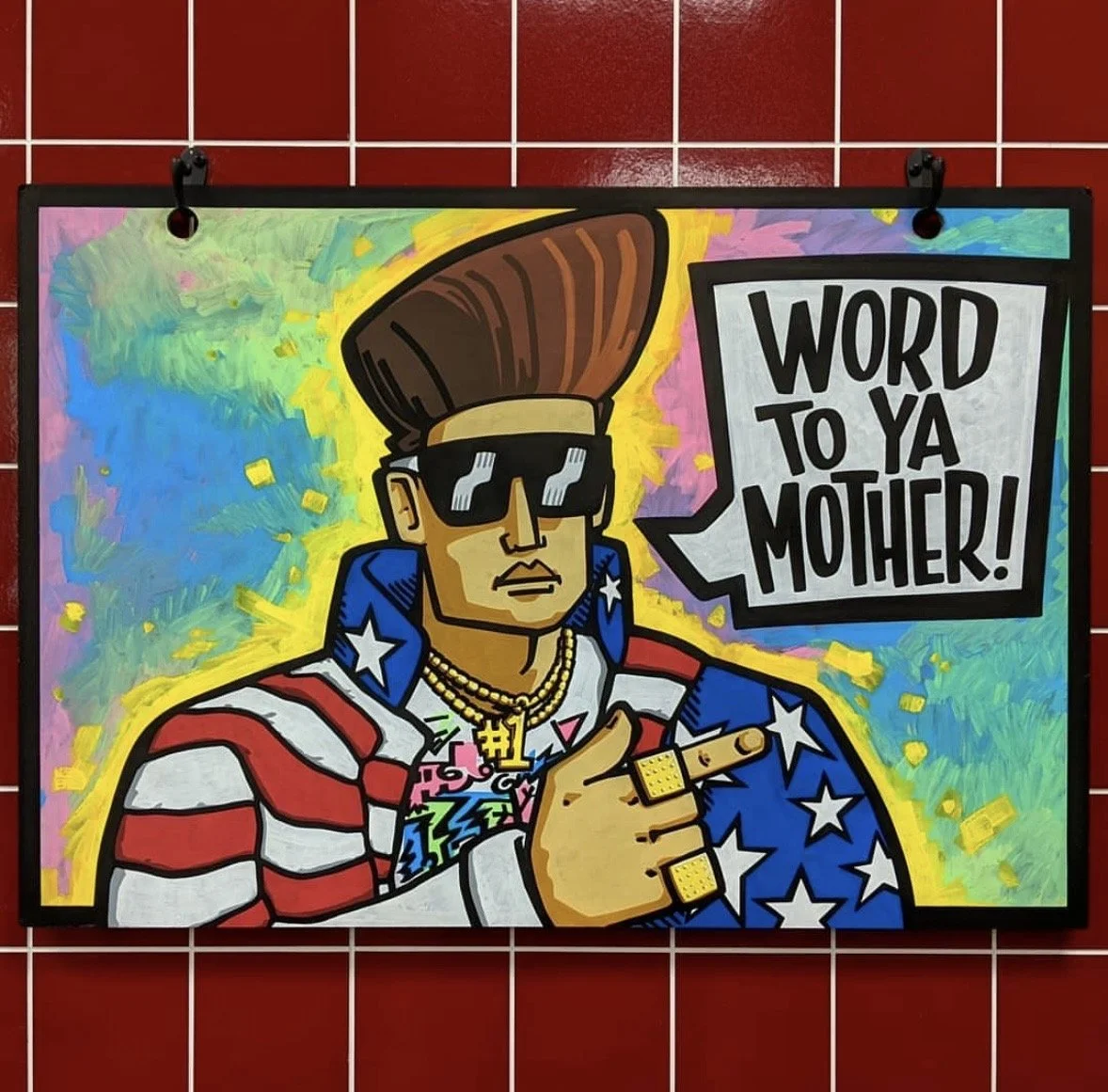
A Mother’s Day sign Jeremy made after he began adding his own personality to his Trader Joe’s art.
There are a host of other roads the story of his life takes that gets him to this place (like owning a coffee shop, maintaining his own farm, breaking his back (literally), and living in countless cities, states and countries.) Although he has a wildly diverse and interesting past, he also says simply that “If I don’t draw something every day, I don’t feel like myself.”
The fact that Jeremy doesn’t feel like himself unless he draws is a powerful statement to the importance of simple creativity to make us feel alive and whole. If you don’t hear anything else from this article, hear that. … So I’ll say it again. The fact that Jeremy doesn’t feel like himself unless he draws is a powerful statement to the importance of simple creativity to make us feel alive and whole.
There are so many other juicy lessons in Jeremy’s story! First is that he continued to draw fonts for fun even when he thought it wasn’t possible to make art for a living. This polished skill that was natural to him was exactly what shined through on his application landing him an art job. In fact, after the Jeremy TJ's interviewer offered Jeremy an art job Jeremy told him that he didn’t have a portfolio to show. The interviewer said his application was the best portfolio he could ask for!
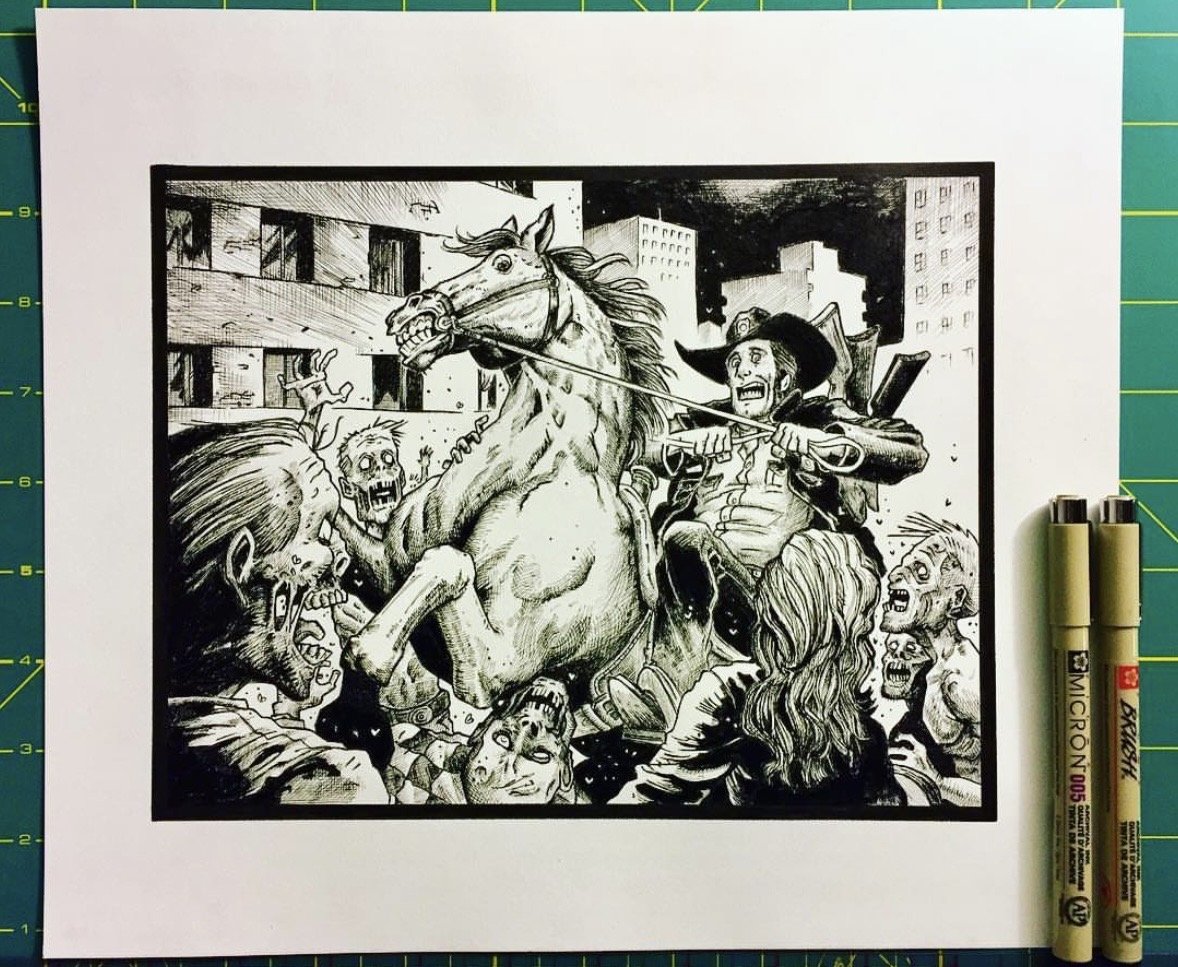
The Walking Dead ink reproduction commission where Jeremy added a few of his own flairs.
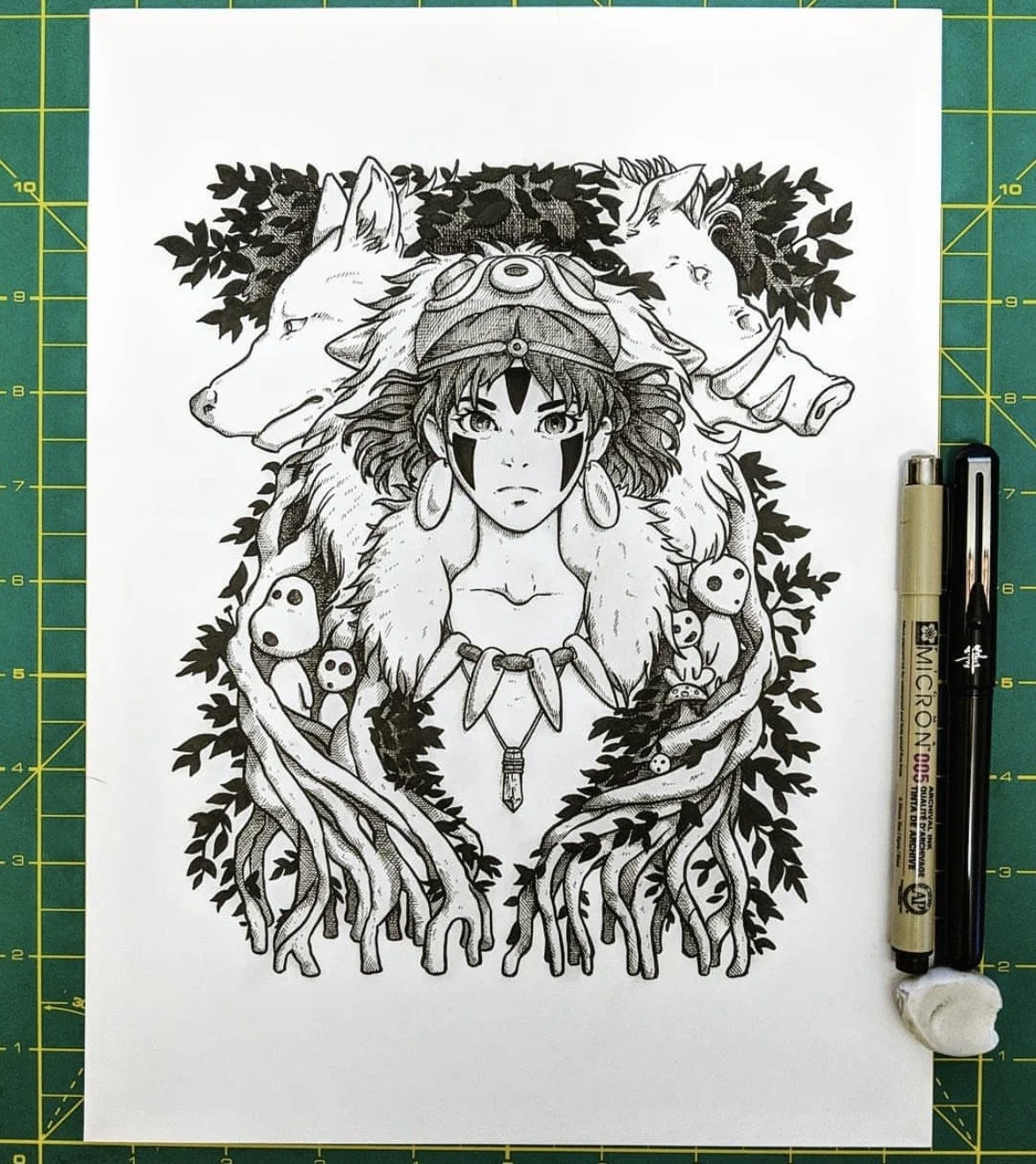
Princess Mononoke ink reproduction commission where Jeremy added a few of his own flairs.
This reminds me to keep creating what I love for fun and also to bring my creativity and personality to all the normal things I do. It was only because Jeremy did that with his application that his artistic talents were discovered. This is how we create a world where everyone is living their passion and can get plugged into places that align with their gifts. If you don’t roar, you can’t find your pack.
Secondly, Jeremy had a specific way he wanted to make art for a living, which was traditional animation. It appeared to him that the opportunity was lost by the time he graduated high school. Little did he know that in a few years he would be drawing fonts and animated pictures, like Arugula Wasabi, for a living which would lead to other large scale art commissions.
So many times there are opportunities that are a better fit for us than what we have imagined for ourselves. This is a great reminder to focus on the things we love, to keep doing them, sharing them and watching for opportunities. Opportunities may look very different than what we have thought they would be. Be open to your dreams coming true and keep watching.
I asked Jeremy if he has suggestions for people who want to develop their drawing skills or even just experiment. He said the one thing he still remembers and lives by (draws by) is advice an artist gave him: Put a motor on it. He says that it's an easy trap to get in your head and be a perfectionist. He finds that it’s helpful to sketch out ideas with larger, faster strokes so it becomes more of a feeling activity rather than a brain activity. When you put a motor on it you are more free and present in the moment.
Jeremy shares that it’s equally important as you put a motor on it to allow yourself the freedom to experiment and to make bad art. Let me say that another way, he says to make bad art. It’s part of the process. Experiment with colors, style, size, perception, and materials. See what works and what doesn’t work. Bad art is part of the process of art. You may make five bad sketches before you make one that you like. It’s all part of the process.
Jeremy reminds us not to focus on the end product. Art is about the creation process, about being present in the moment. It’s about what you, the artist, experiences. It’s about how the artist is changed by creating the art. This is such a valuable reminder for any form of creativity.
Remember how Jeremy said he doesn’t feel like himself unless he draws something every day? Drawing for him is about how the act of drawing changes him, first and foremost. Creativity is an elemental part of who he is. When he expresses that creative part of himself through drawing he feels alive. He feels connected to himself. What a beautiful example!
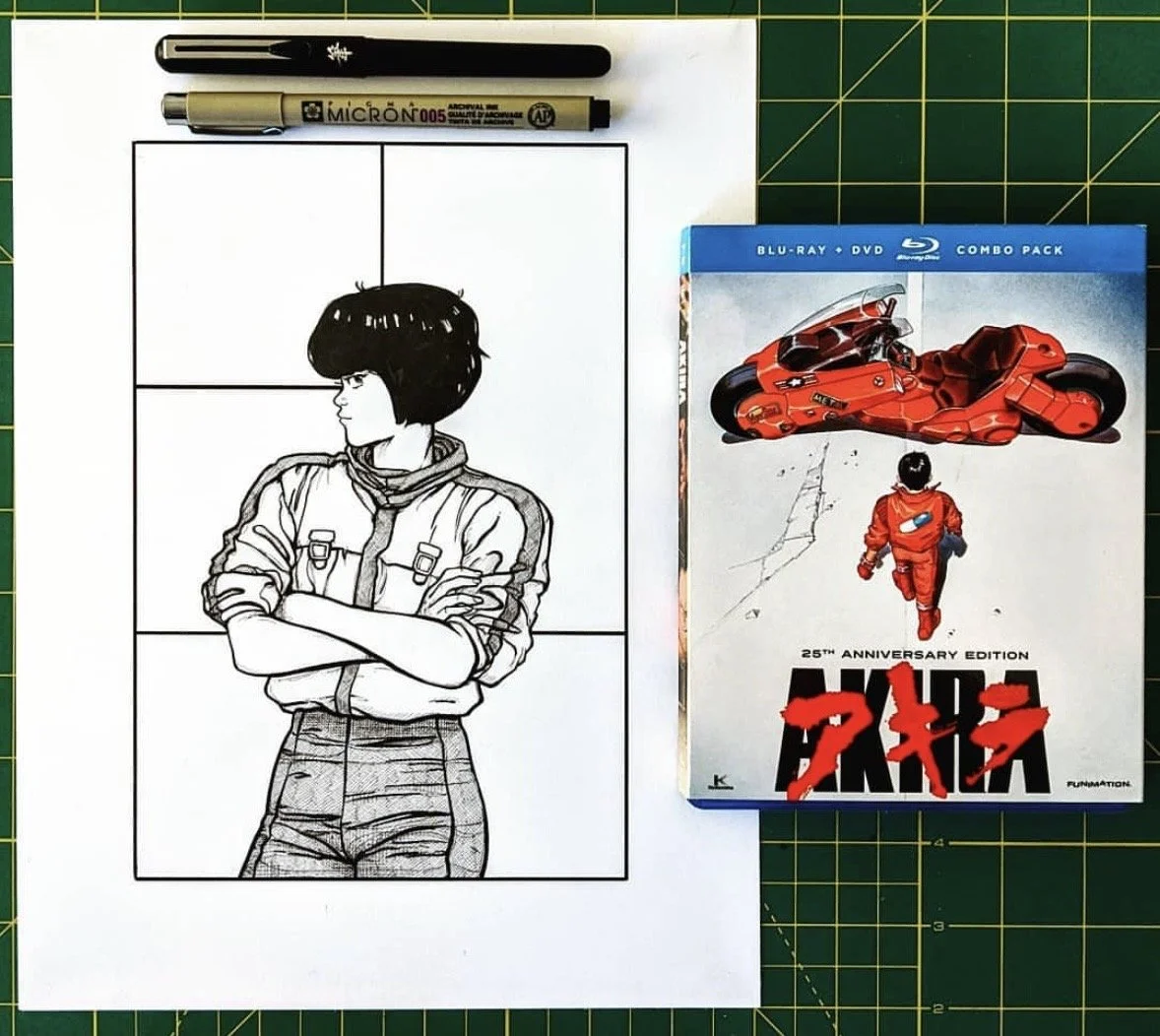
Akira. Jeremy made this for kicks because he’s simply a fan of the source material and the style of the artist.
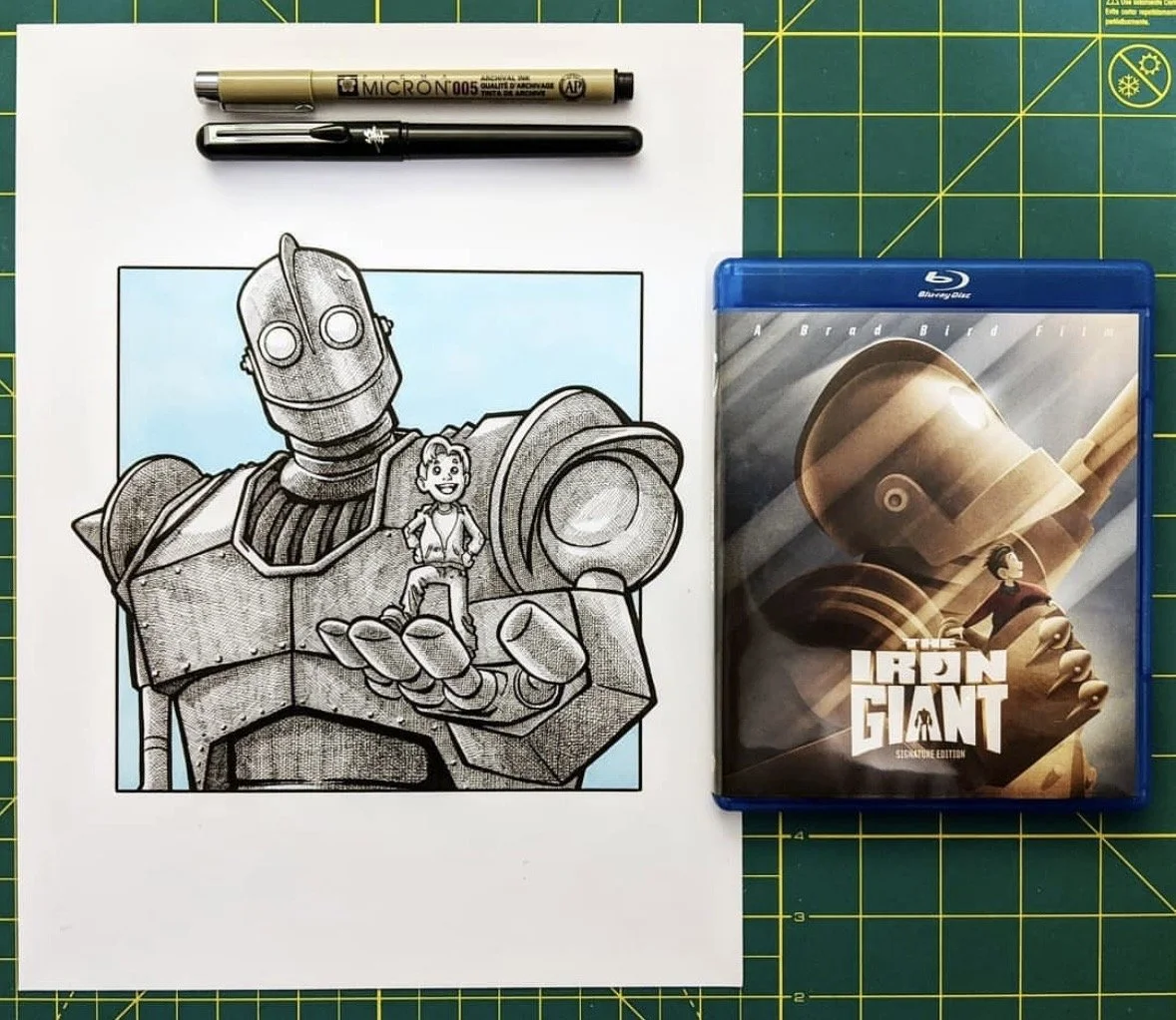
The Iron Giant. Jeremy made this for kicks alsbecause he’s simply a fan of the source material and the style of the artist
These tips have been for anyone in their creative journey. I want to wrap it up with this valuable advice from Jeremy to anyone who desires to make art for a living. He’s had many potential clients approach him with large jobs and say that in lui of paying, it would be a great opportunity for Jeremy because of the exposure. Jeremy always replies the same way: “Are you able to pay your bills with exposure?” They always say no, to which he replies, “same here.” And he follows that up with, “you contacted me, which means I’m already exposed.”
He shared with me that he doesn’t say those things to be a jerk, but he’s unwilling to budge on his pricing because he knows his worth. He would never ask any professional, regardless of vocation, to work only for exposure. He says it’s insulting and a complete disregard for someone else’s craft and the years of dedication required to become a professional.
So if you want an art career in our current culture, remember that you choose the value of your art. That may require you to be tenacious in your career pursuit and your boundaries.
Keep doing the things that light you up. Always remember that little boy who carried around a red Mario Brothers lunchbox full of colored pencils. He did that because he was always lettering and drawing animations because it lit him up. That little boy is now an adult making a living by lettering and drawing animated pictures.
Thank you, Jeremy, for being willing to sit down and talk with me and allowing me to share your story. You are a brilliant example of living a creative life. You inspire and encourage us!
New Instagram Account Please check out Jeremy’s brand new Instagram account! He recently deleted his old account and started a new studio with a new account @twin.kitties.art.studio
********************
*If you’d love to have a friend (that’s me!) send you emails of encouragement, insight and suggestions to live a creative life, then click here to sign up for CELEBRATE The Newsletter. Or pop in here to the blog whenever the spirit moves you for a creative nudge!
Creating makes me feel alive. I want you to experience that same vibrancy!
